
GitHub Notifications Are Broken for Small Teams (Here's the Fix)
GitHub notifications create fatigue for small teams. Learn how personal Slack alerts help developers catch reviews, failed builds, and deploy issues faster.
GitHub notifications should help small engineering teams move faster. Instead, they often do the opposite. The default inbox gets noisy, GitHub activity floods Slack channels, and developers slowly train themselves to ignore both.
That is not a discipline problem. It is a tooling problem. When teams get too many low-signal updates, they miss the alerts that actually matter: review requests, failed checks, deploy failures, and comments blocking a merge.
If you are already feeling pressure from faster AI-assisted coding cycles, this gets worse. Writing code is faster than ever. Review is becoming the bottleneck. That means better pull request notifications are not a nice-to-have anymore. They are part of shipping faster.
GitHub notification fatigue is real
Most developers do not wake up and decide to ignore GitHub notifications. They learn to do it after being interrupted too many times by events that do not require action.
- You are subscribed to threads you do not really own.
- You see bot updates mixed with human requests.
- You get comments that are informative but not actionable.
- Important alerts look identical to low-priority activity.
Over time, the entire stream starts to feel optional. That is when teams start missing the things that should never be missed.
What small teams actually miss
Small teams feel this harder because there is less process padding. A missed notification does not just sit in a dashboard. It directly slows someone down.
- A review request sits for hours because the reviewer never saw it.
- A failed build or deploy is noticed late, after someone asks what is blocked.
- A comment that needs a quick answer delays the merge for a full cycle.
- A busy Slack channel makes critical PR updates look like background chatter.
This is why many teams start looking for alternatives to the default inbox or comparing GitHub notifications vs Slack DM flows. The problem is rarely a lack of notifications. It is a lack of relevance.
More alerts do not fix the problem
A common reaction is to send more GitHub activity into Slack. That can help with visibility, but it often just moves the noise from one inbox to another.
Shared channels are good for awareness. They are bad at personal prioritization. If every pull request event lands in the same place, each developer still has to scan the stream and decide what matters to them. That manual filtering work is exactly what creates fatigue.
If this sounds familiar, the goal is not to send more messages. The goal is to reduce Slack notification noise and make the remaining notifications obviously actionable.
In the AI era, review is the bottleneck
AI tools are helping teams write code, generate tests, and open pull requests faster. That is useful, but it also creates more review load. The slowest part of the workflow is often no longer writing the code. It is getting the right humans to react to the right events in time.
High-signal notifications help teams merge faster because they shorten the delay between:
- a PR being ready and a reviewer noticing it
- a failing check and the author reacting to it
- a deploy issue and the owner investigating it
Better alerts do not just improve convenience. They improve throughput. That is a big part of how teams reduce PR review time with Slack alerts.
What we saw internally after trying GitNotifier
We saw this issue firsthand because we were using native GitHub notifications ourselves. The pattern was familiar: too much noise, too little clarity, and important alerts getting buried in the same stream as everything else.
After trying GitNotifier internally, several colleagues stopped relying on the native GitHub app and switched to GitNotifier instead. That was a strong product signal for us.
Nobody needed a long training session to understand the difference. When the number of irrelevant notifications drops, people pay attention again. When review requests and failures are easier to spot, teams move faster.
The fix: personal GitHub alerts in Slack
Small teams do not need another dashboard. They need a better notification layer.
The best setup is simple: send each developer the GitHub events they need to act on, in the tool they already check all day, without pushing every repository event into a shared channel.
- Review requests should reach the reviewer directly.
- Failed checks and deploy issues should reach the author or owner quickly.
- Non-actionable activity should stay out of the way.
- Teams should get fewer notifications, but better ones.
That is the idea behind Slack pull request notifications with GitNotifier: personal, high-signal alerts that help developers review and merge faster without living in the GitHub notifications tab. If you want to compare all the available options before committing, see our guide to every Slack notification option for GitHub.
GitHub notifications do not have to stay broken
If your team is missing review requests, delayed by failed builds, or numb to GitHub and Slack noise, the fix is not more discipline. The fix is better signal design.
Try GitNotifier with your team and get personal PR alerts in Slack so the right people see the right events at the right time.
Read more
View all articles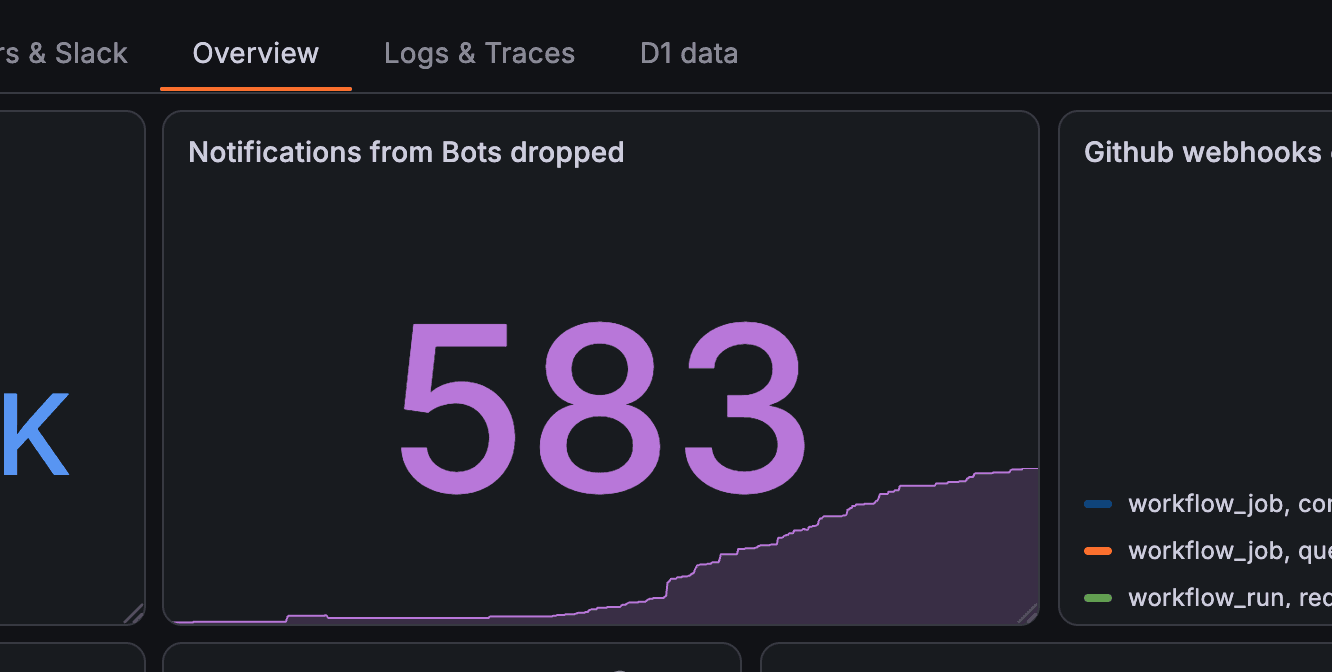
How GitNotifier Drops Bot Comment Spam and Only Sends You Meaningful Notifications
GitHub bots generate massive notification noise. Here is how GitNotifier filters out bot comment spam by default and only delivers the notifications that actually need your attention.
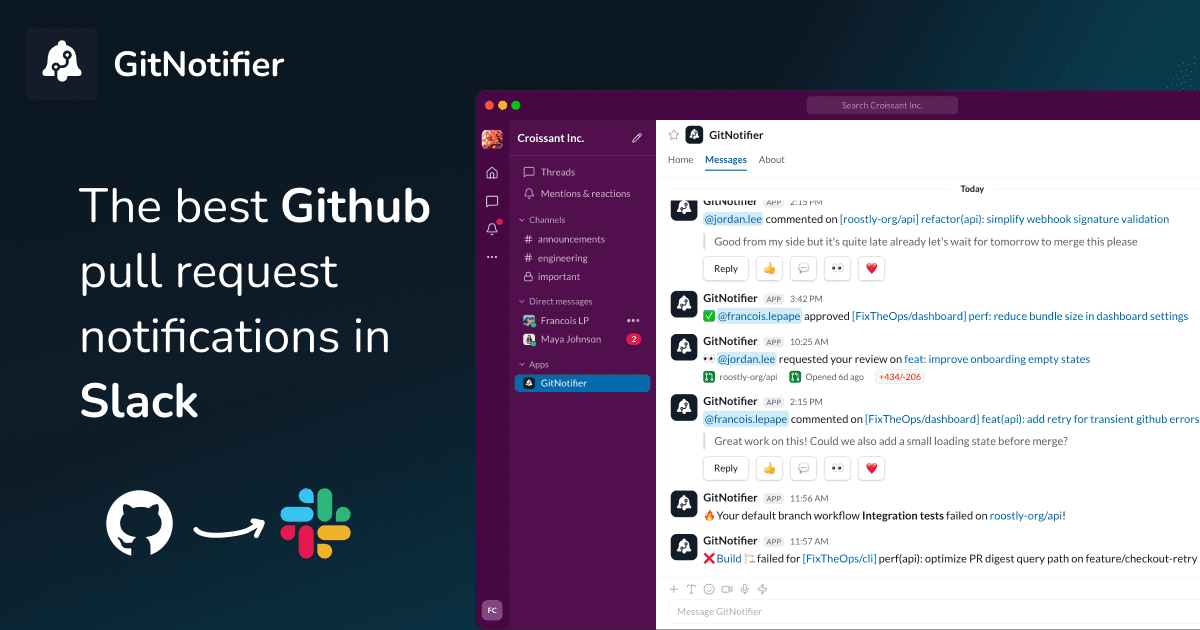
Slack Notifications for GitHub: Every Option Compared (2026)
Compare every way to get Slack notifications for GitHub in 2026: the native app, GitHub Actions webhooks, Axolo, and GitNotifier, with honest tradeoffs for each.
How to Get GitHub Notifications in Slack (3 Ways)
Learn how to get GitHub notifications in Slack three ways: the native GitHub Slack app, GitHub Actions webhooks, and personal PR alerts with GitNotifier.